Subscribe to MJSS Updates

Leave your email to receive the first Call for Papers and launch updates of the MYCDIC Journal of Strategic Studies.

All Sections About & Mission Launch 2026 Editorial Board
International Relations Diplomacy Security Economy Moroccan Sahara Studies Atlantic

MYCDIC JOURNAL OF STRATEGIC STUDIES

Morocco’s Strategic Voice in Global Diplomatic Discourse

The Journal - published under the Moroccan Youth Council for Diplomatic and International Cooperation (MYCDIC) - will officially launch on 15 January 2026, establishing a new hub for research in diplomacy, security, and strategy.

00
00
00
00
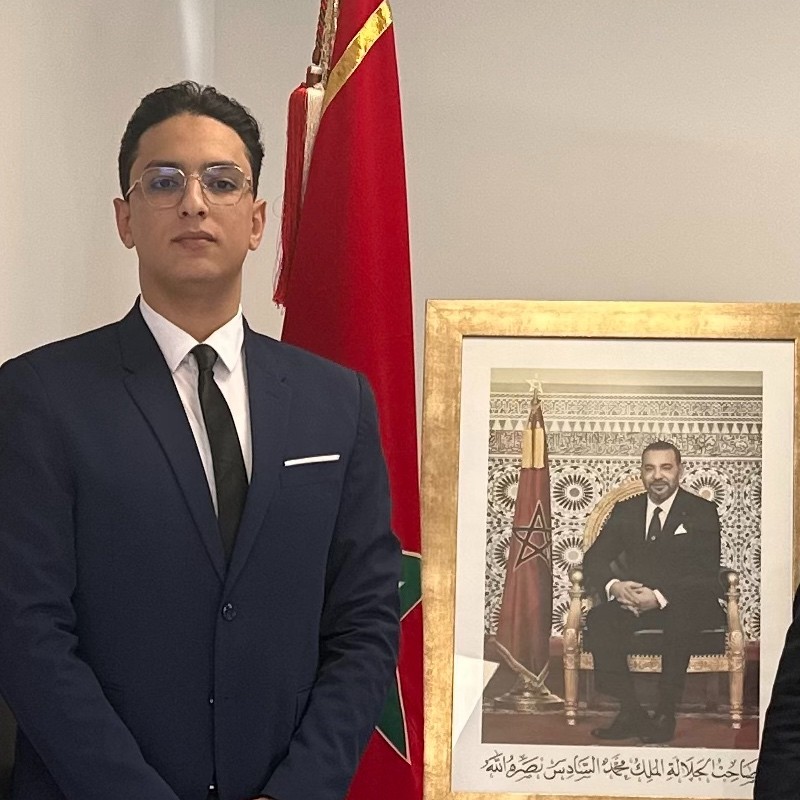
President of MYCDIC

Mr. Moataz KOBRY

President, Moroccan Youth Council for Diplomatic and International Cooperation (MYCDIC)

"The establishment of the MYCDIC Journal of Strategic Studies marks a pivotal step in reinforcing Morocco’s academic and diplomatic presence on the global stage. It embodies our commitment to youth-driven research, strategic foresight, and intellectual diplomacy."

About the Journal

The MYCDIC Journal of Strategic Studies stands as Morocco’s intellectual gateway to global diplomatic and strategic discourse. Established under the Moroccan Youth Council for Diplomatic and International Cooperation (MYCDIC), the Journal bridges academia and policy through peer-reviewed research, policy briefs, and analytical reports that shape global understanding of Morocco’s role in diplomacy, security, and geostrategy.

Based in Spain 🇪🇸, the Journal reflects a cross-continental editorial vision - uniting African and European perspectives in pursuit of strategic excellence and youth-driven diplomacy.

Explore Editorial Focus →
Academic diplomacy

Mission Statement

The MYCDIC Journal of Strategic Studies seeks to position Morocco as a proactive, research-driven actor in regional and global strategic debates. It provides an academic platform where youth, scholars, and practitioners from Morocco, Africa, and partner regions can interrogate the changing landscape of diplomacy, security, and geostrategy.

A youth-led Moroccan initiative connecting African, Mediterranean, and Atlantic perspectives

Editorial Focus

The MYCDIC Journal of Strategic Studies is dedicated to advancing strategic thought, diplomatic analysis, and policy innovation within Moroccan, African, and international contexts. The Journal serves as an intellectual bridge connecting scholars, policymakers, and practitioners.

🎯 Academic Diplomacy

We foster research that unites academic inquiry with practical diplomacy, reinforcing Morocco’s intellectual leadership in international affairs and global policy discussions.

🌍 Global & Regional Strategy

Our editorial scope integrates North–South and South–South cooperation, emphasizing Morocco’s geostrategic position across Africa, the Mediterranean, and the Atlantic.

📚 Youth-Led Knowledge

As an initiative of the Moroccan Youth Council for Diplomatic and International Cooperation (MYCDIC), the Journal empowers emerging scholars and young diplomats to produce high-impact strategic analysis.

Thematic Sections (Research & Topics)

Each thematic section defines a core strategic area for the MYCDIC Journal of Strategic Studies, outlining its scope, guiding research questions, and preferred formats for contributions.

International Relations & Geopolitics

Scope: Theories of international relations, shifts in global power structures, grand strategy, and emerging alliances.

Recommended formats: Theoretical papers, power analyses, systematic reviews.

Diplomacy & International Cooperation

Scope: Traditional diplomacy, public and cultural diplomacy, and multilateral engagement.

Content types: Case studies, cooperation policy analyses, initiative proposals.

Security & Defence

Scope: Traditional and non-traditional threats - terrorism, armed conflicts, cybersecurity, and maritime security.

Content types: Field reports, defence policy studies, threat assessments.

Economy & Strategic Development

Scope: Geostrategic economy, energy strategies, supply chains, and the blue and green economy.

Content types: Economic analyses, impact studies, strategic proposals.

Moroccan Sahara Studies

Scope: Political, diplomatic, developmental, and human rights dimensions of the Moroccan Sahara.

Content types: Historical studies, field reports, development policy papers.

Atlantic Initiative & Regional Integration

Scope: Transatlantic cooperation (Africa–Europe–Americas), maritime security, and the Atlantic economy.

Content types: Policy papers, regional cooperation studies.

Regional Focus

The Journal adopts a structured regional focus, encompassing Africa, Asia, the Middle East, Europe and NATO, the Mediterranean, the Atlantic space, and Latin America. Each regional cluster addresses key strategic, diplomatic, and security dynamics relevant to Morocco and its international environment.

AF

Africa

Focuses on continental dynamics, regional cooperation, and Morocco’s strategic role within Africa.

  • North Africa: Regional security, migration governance, Maghreb cooperation.
  • West Africa & Sahel: Stability, multidimensional threats, peace operations.
  • Central Africa: Natural resources, internal conflicts, international involvement.
  • East Africa & Horn: Maritime corridors, strategic chokepoints, regional responses.
  • Southern Africa: Economic integration, developmental policies, mining impacts.
  • African Union: Continental integration, Agenda 2063, Morocco’s engagement.
AS

Asia

Examines Asia’s evolving geopolitical architecture and its implications for global governance.

  • Indo-Pacific: Maritime transformations, strategic alliances, sea lanes.
  • Southeast Asia: ASEAN frameworks, trade and security dynamics.
  • South Asia: India–Pakistan relations, border issues, nuclear deterrence.
  • Central Asia: Energy networks, connectivity corridors, great-power competition.
  • East Asia: China, Japan, and technological geopolitics.
ME

Middle East

Addresses political transitions, energy geopolitics, and evolving regional security architectures.

  • Energy markets and strategic resources.
  • Regional conflict systems and de-escalation efforts.
  • Normalization processes and alliance reconfiguration.
EU

Europe & NATO

Analyses European integration, continental security, and transatlantic defence arrangements.

  • European Union: Common policies, strategic autonomy, external action.
  • Eastern Europe & Balkans: Border security, Russia–Europe relations.
  • NATO: Alliance adaptation, partnerships with African and Mediterranean states.
MED

Mediterranean

Focuses on Euro-Mediterranean relations, human mobility, and maritime security.

  • Migration routes and border management.
  • Maritime, energy, and environmental security.
  • Cultural and inter-civilizational diplomacy.
ATL

The Royal Atlantic Initiative

Explores Atlantic cooperation frameworks linking Africa, Europe, and the Americas.

  • Atlantic diplomacy and political dialogue.
  • Maritime routes, ports, and strategic sea lanes.
  • Atlantic economy and South–South cooperation.
LA

Caribbean & Latin America

Studies regional integration models, economic diplomacy, and South–South partnerships.

  • Regional economic blocs and political unions.
  • Trade and investment diplomacy.
  • Comparative perspectives on integration experiences.

Publication Types

The MYCDIC Journal of Strategic Studies accepts a selected range of academic and policy-oriented contributions. Each type follows a clear structure and is assessed according to rigorous scholarly and editorial standards.

Unless otherwise specified, submissions are expected to follow a standard academic structure: Title, Abstract, Keywords, Main Text, and References.

📘

Research Papers (Peer-Reviewed)

Original scholarly articles subject to double-blind peer review.

  • Nature: High-quality, original research in diplomacy, security, geostrategy, political science, and related disciplines.
  • Structure: Title; Abstract (150–250 words); Keywords (4–6); Introduction; Literature Review; Methodology; Results / Analysis; Discussion; Conclusion; References.
  • Citation Style: APA 7th edition or Chicago Author–Date.
  • Appendices (optional): Tables, figures, maps, datasets, or methodological annexes.
  • Ethics: Disclosure of conflicts of interest and, where applicable, confirmation of ethical approval and research permissions.

🧾

Policy Briefs

Decision-oriented papers addressed to policymakers and practitioners.

  • Nature: Concise analysis of a clearly defined policy problem, with actionable recommendations.
  • Structure: Title; Executive Summary (50–100 words); Background; Problem Statement; Evidence / Analysis; Practical Recommendations.
  • Length: Typically between 1–4 pages.
  • Audience: Policymakers, diplomatic services, international organisations, and strategic institutions.
📊

Reports

Structured outputs based on projects, conferences, or field research.

  • Nature: Analytical reports derived from research projects, observation missions, workshops, or conferences.
  • Structure: Executive Summary; Introduction; Methodology; Findings / Results; Analysis; Conclusions; Recommendations; Annexes (where relevant).
  • Scope: Thematic, country-specific, or regional assessments, including comparative or longitudinal studies.
✒️

Opinion & Analysis

Editorially reviewed commentary and analytical essays.

  • Nature: Thought pieces, analytical commentaries, and reflective essays on contemporary strategic and diplomatic issues.
  • Review Process: Editorial review (non–peer-reviewed) by the Editorial Board.
  • Length: Typically between 800–2,000 words.
  • Requirements: A clearly articulated standpoint, coherent argumentation, and the use of relevant evidence or citations.

What to Expect at Launch

On 15 January 2026, the MYCDIC Journal of Strategic Studies will inaugurate its pre-launch cycle as a specialised platform for strategic and diplomatic research. The launch will mark the formal opening of submissions and the presentation of the Journal’s editorial and thematic roadmap.

Launch Day

Official Announcement & Call for Papers

The Editorial Board will announce the Journal’s inaugural publication cycle and open the first Call for Papers in line with its thematic and regional priorities.

  • Publication of the first Call for Papers.
  • Confirmation of thematic clusters and research domains.
  • Guidance for early contributors and partner institutions.
For Authors

Submission Channels & Author Guidance

At launch, contributors will be able to submit manuscripts directly to the Editorial Office and access core guidance on format, standards, and evaluation.

  • Dedicated submission email: journal@mycdic.org.
  • Overview of accepted publication types and expected word ranges.
  • Outline of the double-blind review and editorial decision process.
Looking Ahead

Inaugural Issue & 2026 Agenda

The launch will also introduce the Journal’s strategic agenda for 2026, including the roadmap toward the first full issue.

  • Announcement of the target timeline for the inaugural issue.
  • Priority themes linked to Morocco, Africa, and the Atlantic space.
  • Opportunities for collaboration with think tanks and academic partners.

Roadmap 2025–2026

The MYCDIC Journal of Strategic Studies follows a progressive pre-launch and launch timeline. The stages below outline the main milestones leading to the official launch and the preparation of the Journal’s inaugural issue.

Q3–Q4 2025

Concept Development & Pre-Launch Design

Consolidation of the Journal’s vision, thematic focus, and editorial positioning under the Moroccan Youth Council for Diplomatic and International Cooperation (MYCDIC). Development of the pre-launch web presence and core communication materials.

January 2026

Official Launch & Opening of Submissions

Formal launch of the Journal on 15 January 2026, announcement of the first Call for Papers, and activation of submission and editorial channels for contributors from Morocco, Africa, and partner regions.

Mid–Late 2026

Preparation of the Inaugural Issue

Completion of peer review and editorial decisions for accepted manuscripts, followed by preparation of the Journal’s inaugural issue, with emphasis on Morocco’s strategic positioning in its regional and global environment.

Editorial Board

The Editorial Board of the MYCDIC Journal of Strategic Studies represents a dynamic team of Moroccan and international scholars, practitioners, and youth leaders. Together, they ensure academic excellence, strategic depth, and intellectual integrity across all publications.

Editor-in-Chief

Dr. Najoua ZHAR

Editor-in-Chief

Leads the editorial strategy and oversees the peer-review process with a commitment to rigorous scholarship and global engagement. Directs the journal’s academic vision and cross-continental editorial collaboration.

Advisory & Scientific Council

The Advisory Council brings together distinguished academics, diplomats, and policy experts who provide strategic guidance and peer oversight to the Journal’s editorial direction. Their contribution ensures the Journal remains aligned with international academic standards and Morocco’s global vision.

Moroccan Youth Council for Diplomatic and International Cooperation

The Moroccan Youth Council for Diplomatic and International Cooperation (MYCDIC) is a youth-led civic platform dedicated to promoting strategic thinking, public diplomacy, and international cooperation. Through training, dialogue, and research initiatives, the Council empowers young Moroccans to actively engage in regional and global diplomatic arenas.

Hosting the MYCDIC Journal of Strategic Studies is a natural extension of this mission: it provides a rigorous academic space where youth, scholars, and practitioners can contribute to strategic debates on diplomacy, security, and geostrategy.

Based between Morocco and Spain, the Council acts as a bridge connecting African, Mediterranean, and Atlantic perspectives – with the Journal as its flagship research vehicle.